Parametric Family System: Outdoor Kitchens
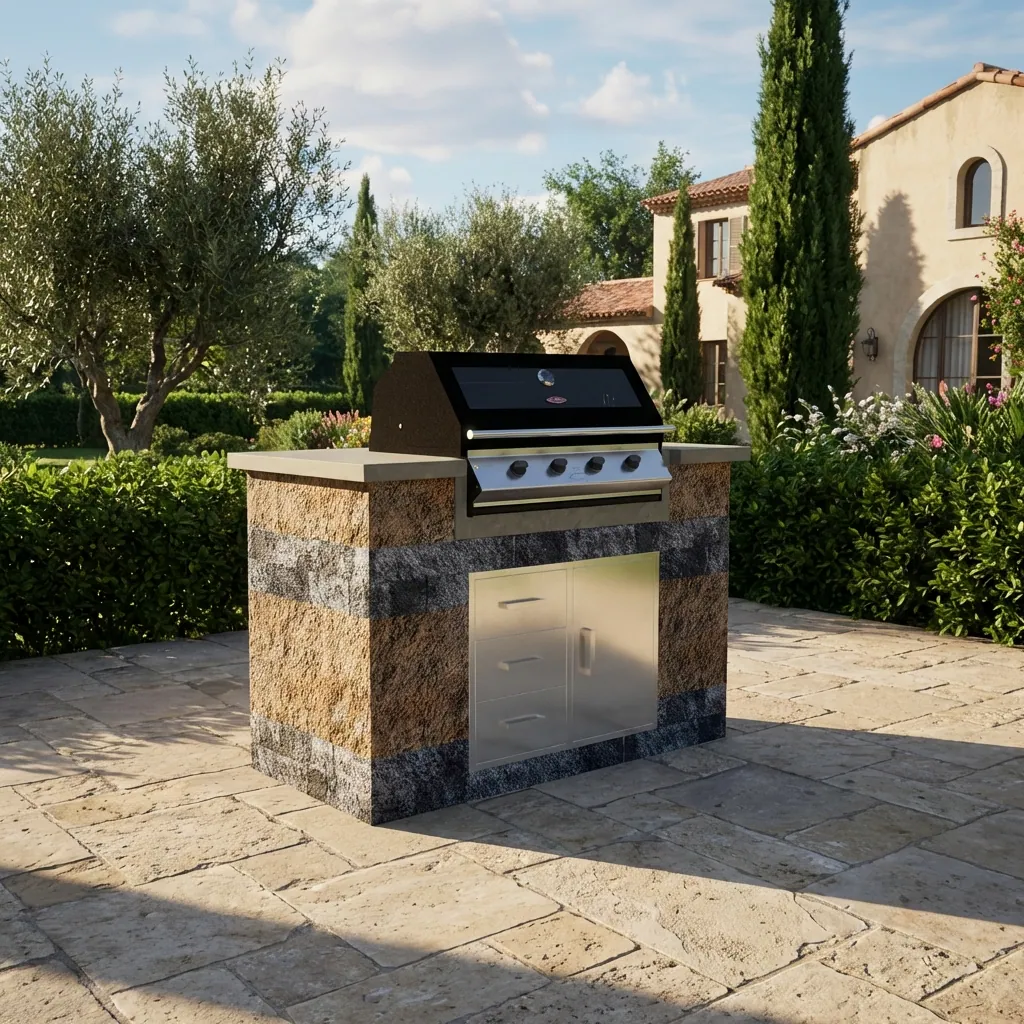
Product Gallery











Executive Summary
I architected a scalable parametric family system to replace a rigid, error-prone workflow. By engineering a 3-tier nested architecture with self-validating logic, I reduced documentation time by 95% and eliminated manufacturing errors. This system became the data foundation for an automated shop drawing plugin, enabling instant, manufacturing-ready deliverables.
The Problem (Before)
The previous workflow relied on Static Model Groups and disconnected families for each product variation. This "brute force" approach created critical bottlenecks:
- Manufacturing Risk: "Closed" geometry models prevented accurate side-by-side connections, requiring manual sketching for manufacturing details.
- Data Silos: Designers worked in "Concept Models," while drafters redrew everything in "Document Models" to fix geometry, doubling billable hours.
- Validation Gap: Users could continuously model invalid combinations (e.g., placing drawers where structural frames were required), leading to costly revisions.
The Solution (System Thinking)
I replaced the static groups with a Modular Parametric System designed for scalability. Rather than modelling every variation, I modeled the logic of assembly.
Primary Architecture
- • Size-Specific Hosts: Dedicated families for 80/120/160cm modules to constrain appliance validity.
- • Dynamic Connectors: Edge conditions (Left/Right/L-Shape) adapt via boolean toggles.
Automation Readiness
- • Structured Data: All outputs normalized for API extraction.
- • Unified Deployment: Single-source-of-truth families used from Concept to Construction.
Technical Deep Dive
1. Intelligent Void Strategy (Manufacturing Safety)
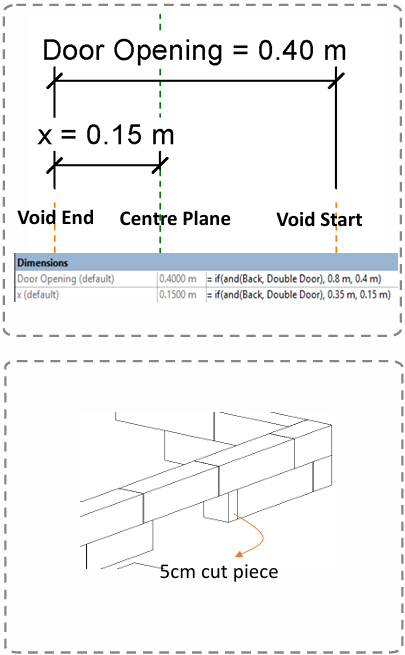
A purely geometric void would create invalid cut lengths. Centering a door opening often results in a 5cm piece of stone, which violates the 10cm minimum cut rule for concrete.
My solution forces a "Safe Cut" using a conditional offset formula:
The user selects a door type. The system automatically enforces the 10cm minimum cut rule.
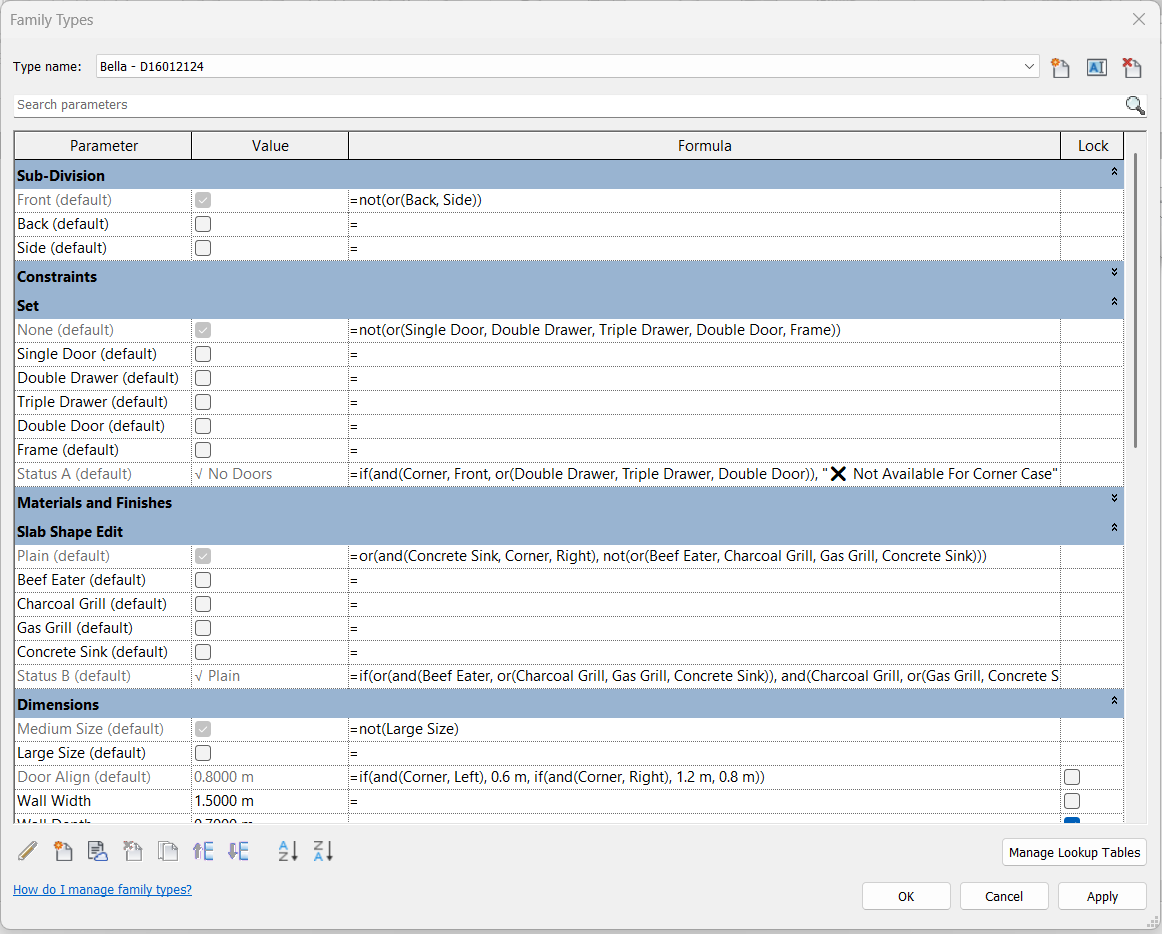
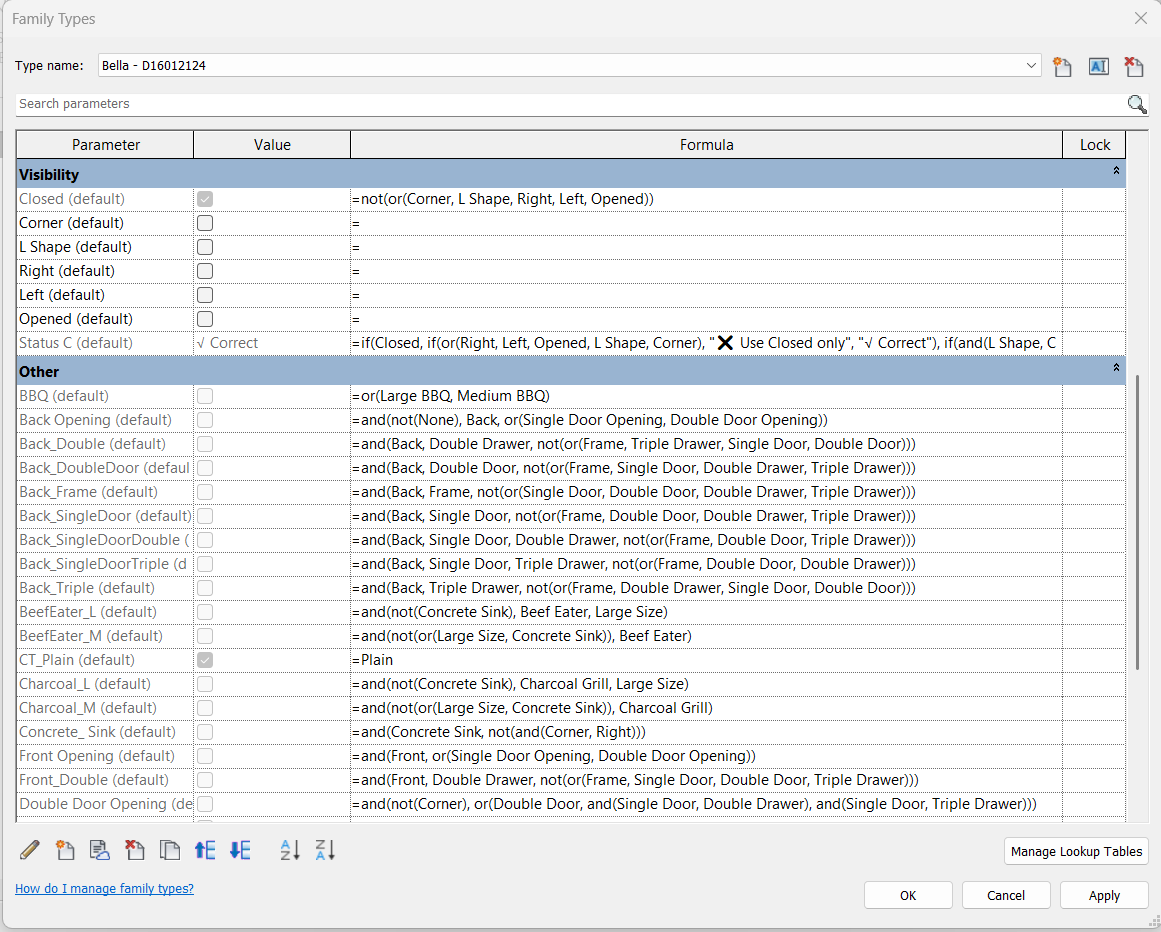
System Formulas Gallery
2. Visibility & Data Flow Logic
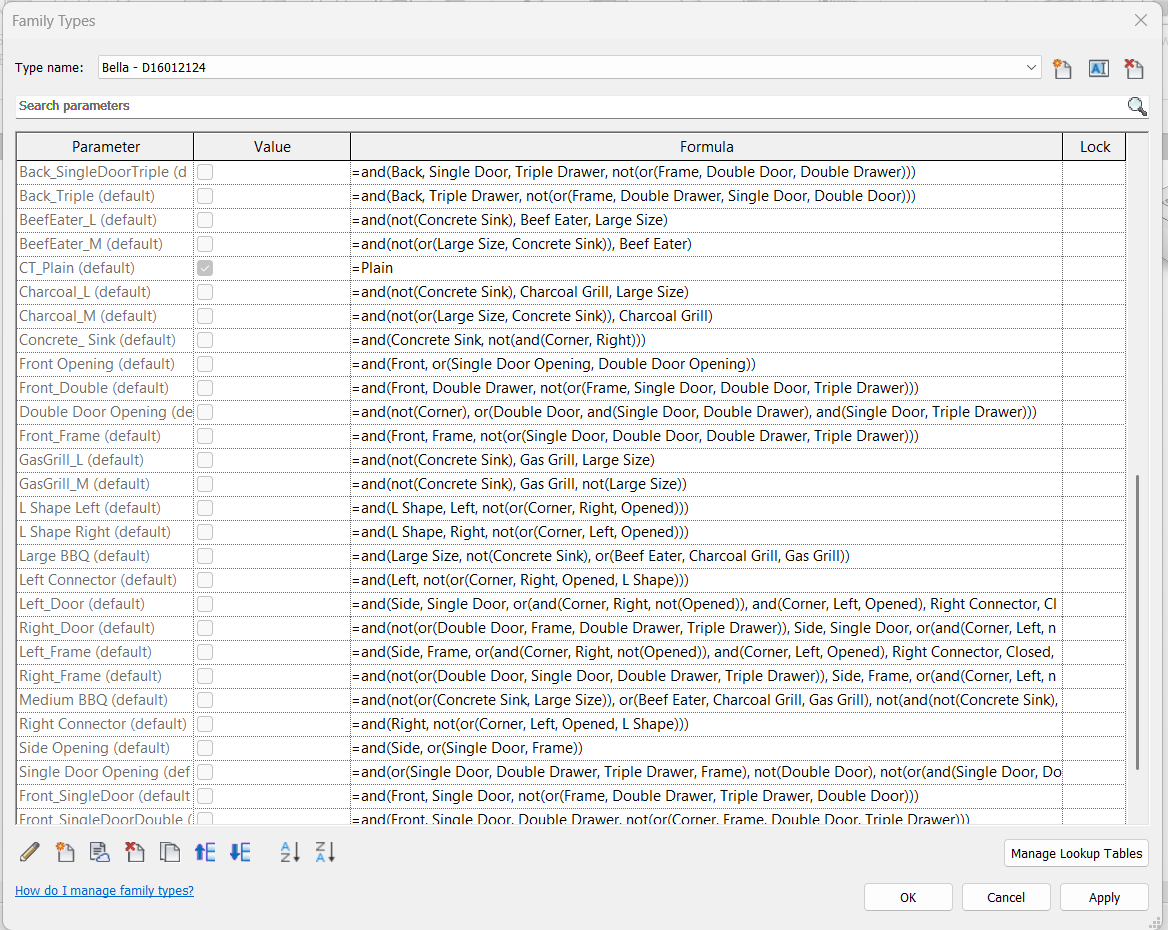
I implemented a strict Input vs. Output parameter separation. The user toggles simple inputs (e.g., "L-Shape"), while the system calculates complex geometry states using nested Boolean gates.
The "One-Active" Rule
The system prioritizes conflicting inputs to prevent geometry overlaps.
Right_Connector = and(Right, not(or(Left, Opened, L Shape)))
3. Nested/Shared Architecture
Atomic Connectors (Geometry)
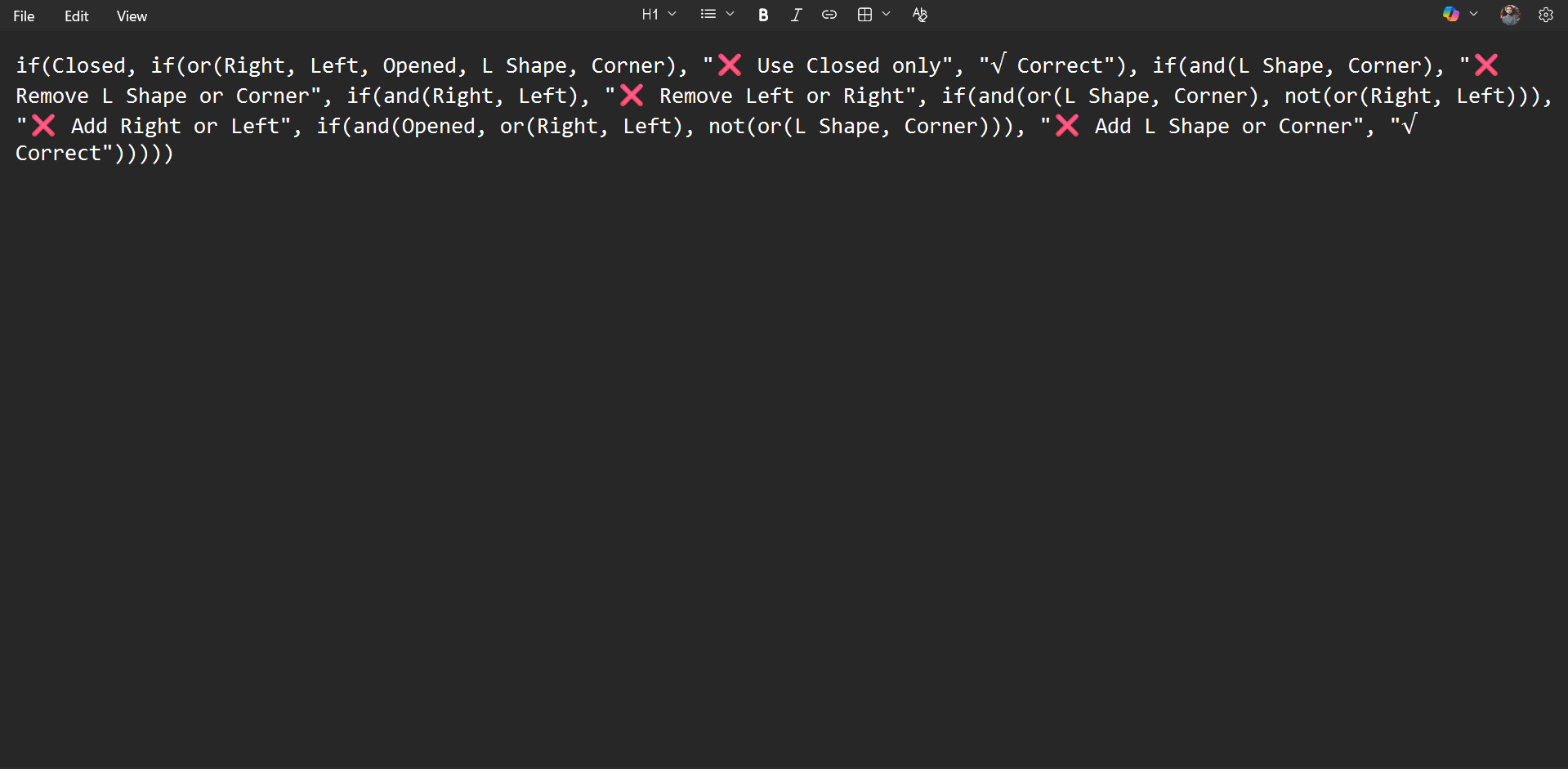
Base generic models defining the 12 specific edge conditions (Left, Right, Corner Opened, etc.).
Container Families (Logic)
Separate "Slate" and "Colored" container families acting as logic switchboards. This separates visual material changes from core connector logic.
Shared Components (Data)
Appliances and stones are set to Shared, ensuring accurate BOQ scheduling in the project regardless of nesting depth.
Quality Control & Automation
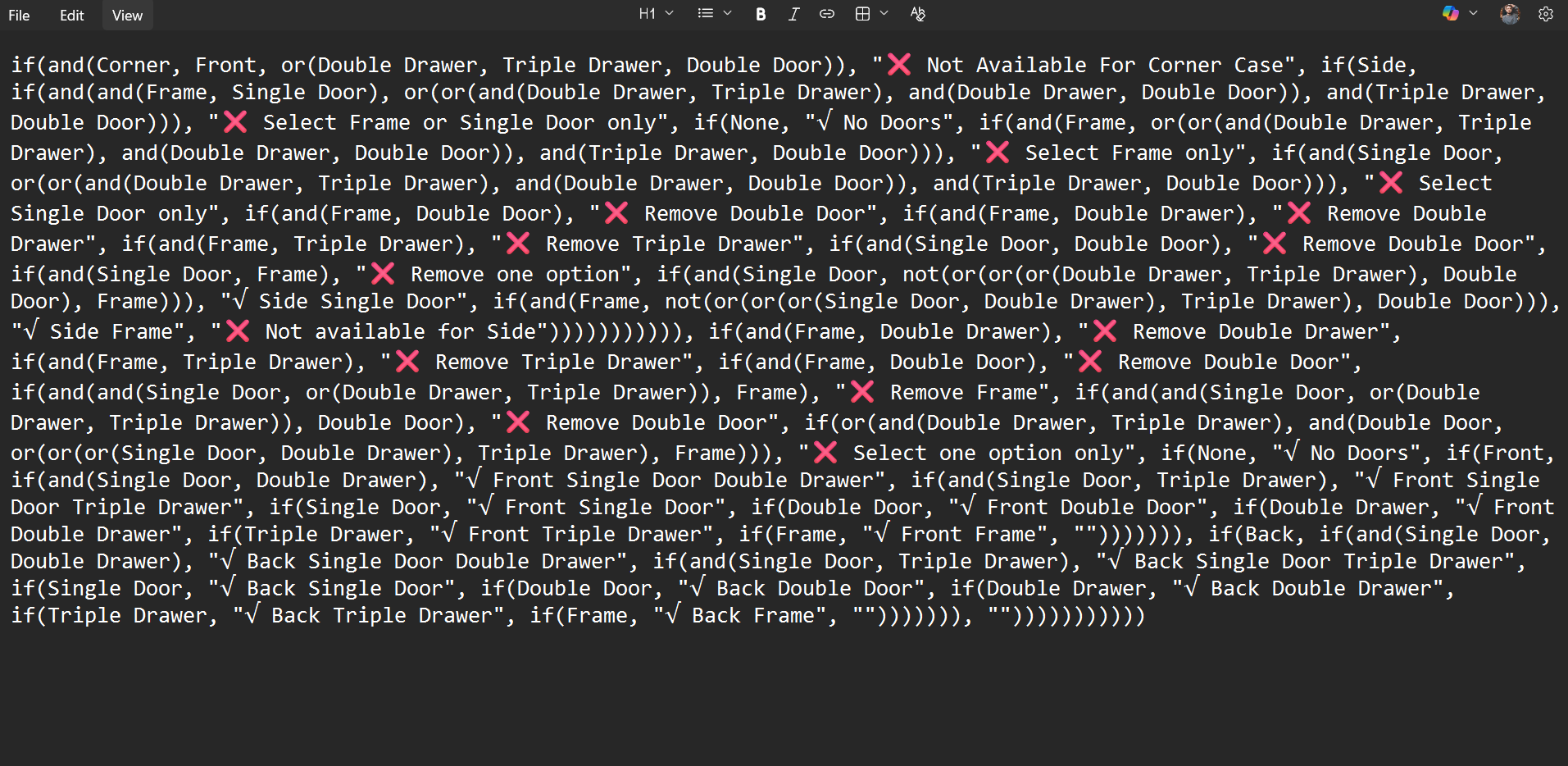
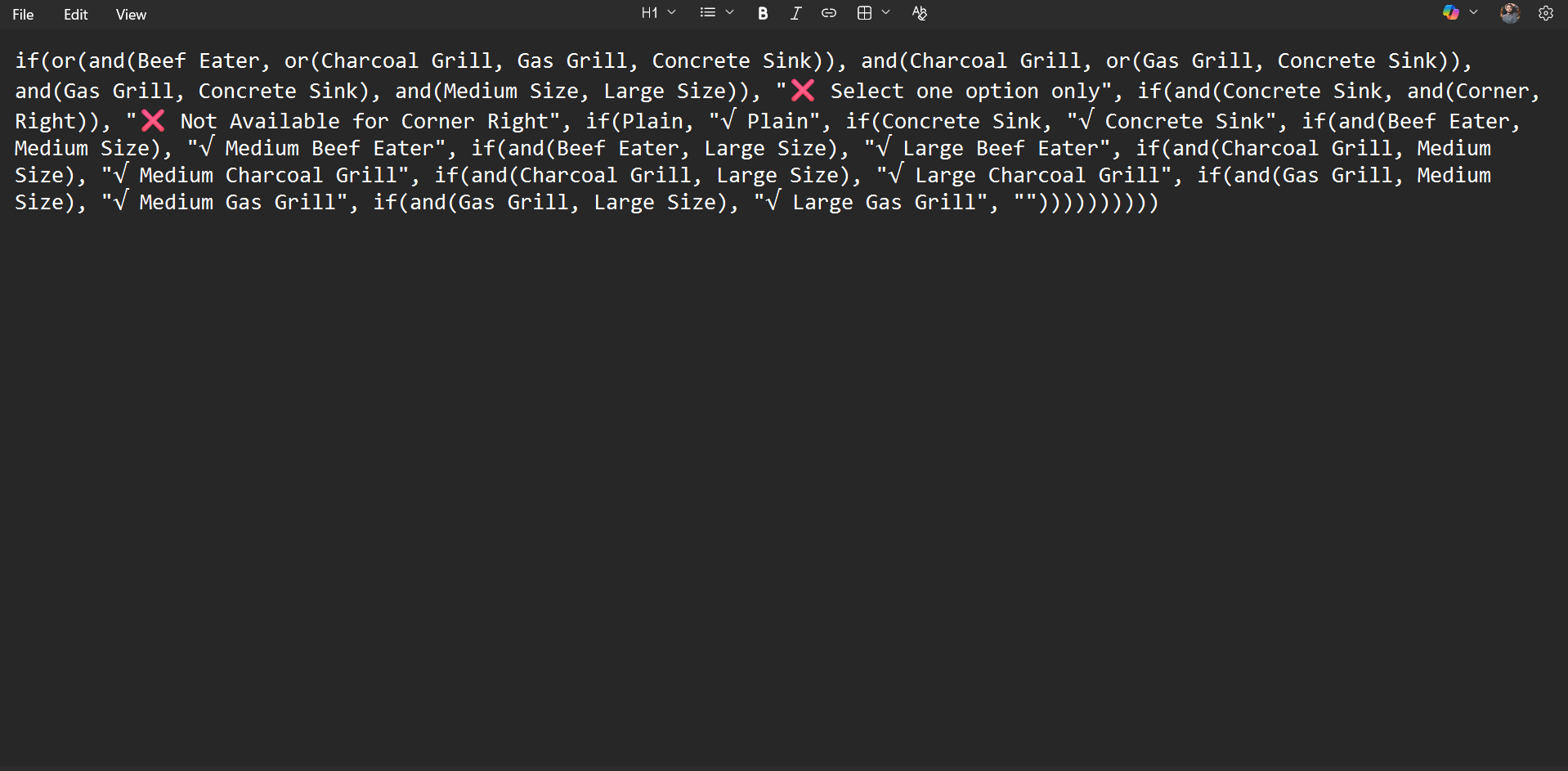
To facilitate downstream automation, the family must be unbreakable. I built a Self-Validating Status System that reports error codes directly to the user in the properties panel.
The Automation Ecosystem
The parametric logic I engineered became the foundation for two internal R&D tools, transforming the family system from a static "library" into a dynamic "software backend." By structuring the Revit data to be machine-readable, I enabled downstream automation that drastically reduced manual drafting time and completely eliminated human error in documentation. This ecosystem allows designers to configure complex layouts in a dedicated UI, which then "compiles" into native Revit geometry without a single manual click. Furthermore, the standardized data structure means that bill-of-materials, cut lists, and cost estimates are generated instantly and accurately.
Kitchen Generator
A plugin where designers select products from a UI, and the script auto-assembles the layout in Revit using the structured parameters (e.g., Auto-L-Shape connection).
Section Generator
A documentation bot that generates full construction sheets for every layer of the kitchen setup with one click, eliminating manual drafting entirely.
Impact & Results
- Documentation Time
- ~95% Reduction
- Revit Template Size
- -40% (Legacy bloat removed)
- Scheduling Errors
- Eliminated
- Designer Autonomy
- 100%
- Team Adoption
- Single Source of Truth
"The system was used as the primary documentation tool, eliminating designer–drafter handoffs entirely."
What This Demonstrates About Me
- • System Design Mindset: Thinking beyond "modeling" to engineer data structures.
- • Manufacturing Aware: Translating real-world constraints (10cm stone cuts) into parameter logic.
- • Automation First: Building stable foundations that enable plugin and API development.